
Building collaborations with Africa
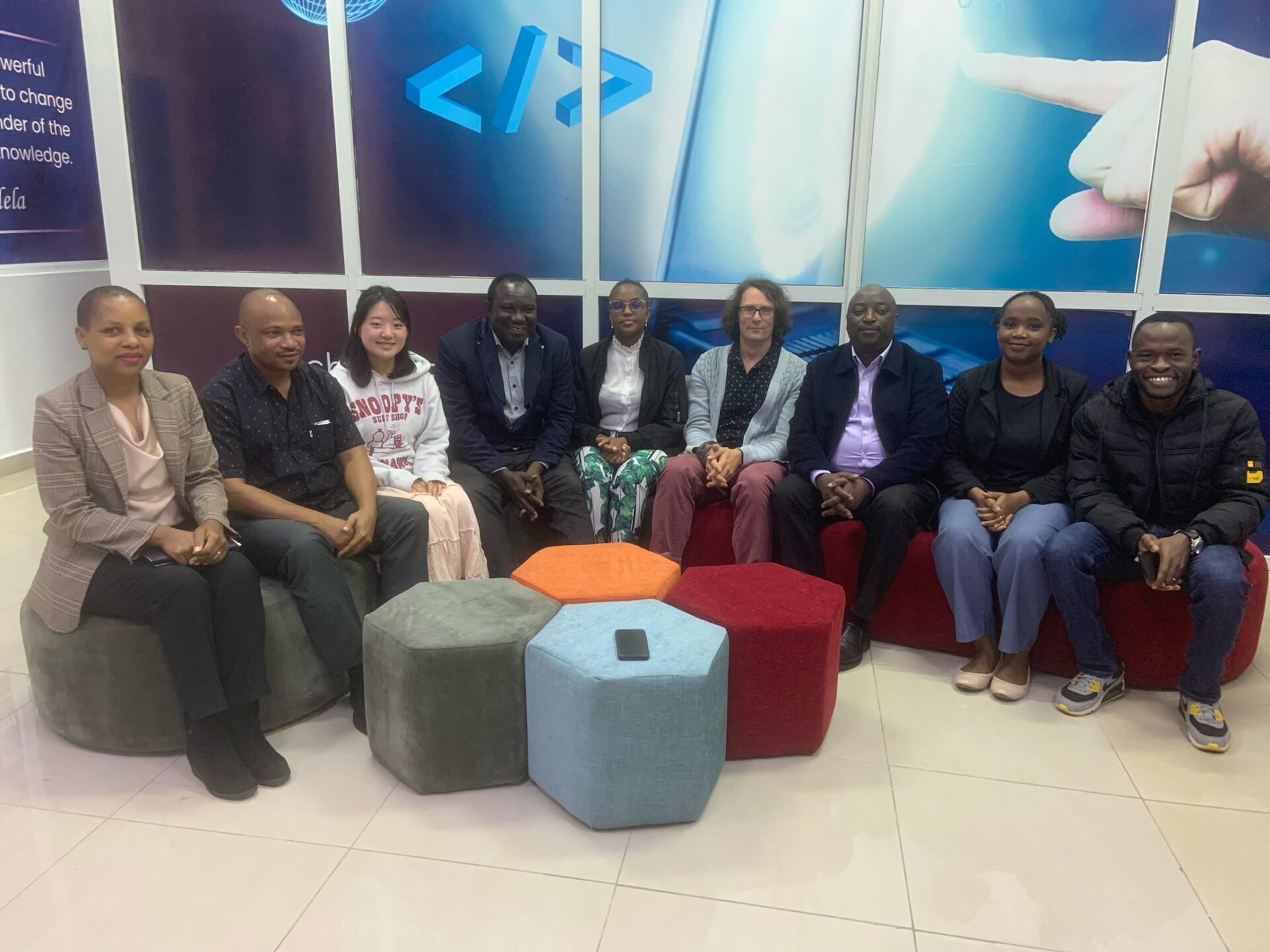
LIFD funded visit to the Nelson Mandela African Institute of Science and Technology
LIFD members Dr Tom Robshaw (TJR) and Dr Timothy Hunter (TH) have recently established a collaboration with academics at the Nelson Mandela African Institute of Science and Technology (NM-AIST) in Tanzania. The overall objective is to design and deploy a dynamic hydrometallurgical treatment system that will defluoridate flowing water in areas of high geological fluoride abundance. This system will also valorise the aqueous fluoride by precipitation of fluorite (calcium fluoride) in a further hydrodynamic process. The work has the potential for significant health and wellbeing benefits for Tanzania; especially residents in more isolated rural areas, without access to bottled water. TJR was recently awarded seedcorn funding from both LIFD and the Royal Society of Chemistry to enable travel and researcher-exchange between the two institutions, which it is intended will underpin a larger multinational grant application in the near future. The first of these visits was recently completed, which allowed TJR to give a research seminar at NM-AIST and engage with the Deputy Vice-Chancellor for Research and Innovation. This visit also elucidated a number of opportunities for collaboration in fluid dynamics related fields in the future. For example, in processing of slurry from biogas generation, which is a popular source of domestic energy in Tanzania.
Activities undertaken on the trip
Funds from the LIFD mobility call were used to allow TJR to travel to Tanzania, accompanied by one of his international summer Laidlaw Scholarship interns, Chloe Joy Chang (CJC), for three working days. This allowed a number of productive activities. One such activity was an exhaustive campus tour, to get an overview of NM-AIST research activities and interests. A number of research streams relevant to fluid flow are being pursued, including slurry treatment from biogas production and construction of artificial wetlands, to remove metal ions from wastewater. The latter led to a discussion of how to handle the biomass produced from the artificial wetlands and it was discovered there were shared research interests in utilisation of local biomass for adsorbent conversion and manufacture, with a view to defluoridation technologies. It was agreed that NM-AIST should start investigating routes to biomass valorisation via Master’s student projects.
Leading the collaboration from the Tanzania side is Prof Revocatus Machunda (RM). He organised a group discussion including a number of academics with interests in fluoride and water treatment in general. This meeting communicated several vital pieces of information regarding mechanisms for engaging with the Tanzania government, NGOs and SMEs, who might become project partners in bringing the proposed technology to market. It also touched on the “non-technical” barriers to be overcome and a roadmap was drawn up, which detailed how relevant local communities would be engaged with and included. The name for the newly-established group was “TUDAY” (Tanzania-UK partnership on Defluoridation by Adsorption technology).
CJC has the opportunity to return to Tanzania in summer 2026, for a work placement of approximately six weeks. It is hoped that the target for this period will include deployment of the defluoridation technology at a source of flowing water and/or in a domestic context. The visit afforded her opportunities to engage with potential supervisors for this period and plan in advance for a successful placement.
The visit culminated with TJR and CJC being invited to deliver a 90 minute research seminar to an audience of ~30 academics and ECRs. The presentation included an overview of the defluoridation technology and ideas for progression. However, it also featured an introduction to several key groups at University of Leeds, which are relevant to the NM-AIST School of Materials, Energy, Water and Environmental Science (MEWES). LIFD was featured prominently in this section, as was Water@Leeds and the Multiform Facility. Key contact details were circulated. TJR was invited to become an affiliate academic at NM-AIST and deliver guest lectures on water processing in the nuclear industry to some newly-established Master’s programmes. The questions and comments received after the presentation were important in steering the work that is ongoing this summer by TJR, CJC and other student interns on this project. This team includes a candidate funded by LIFD, who is investigating hydrodynamic processes for fluorite precipitation from water.
TJR and CJC were able to meet with several senior NM-AIST academics, including the Head of the School of MEWES, Prof Kelvin Mtei and the Deputy Vice Chancellor for Research and Innovation, Prof Anthony Mshandete. Both expressed their strong support for the project and mentioned that the concept of valorisation of fluoride from groundwater in Tanzania was very much a novel concept for the country, and was likely to attract strong support from government and industry. A number of actions were agreed on developing pathways to bring these entities onboard for future activities.
It should also be noticed that this funding was highly enabling for applications for further funding (RSC grant as noted), which will allow RM to visit the UK and conduct research discussions with the broader academic community at Leeds (including any LIFD members who may have shared interests).